- Home
- Steam Resources
- Steam Theory
- Pressure Reducing Valves for Steam
Other Equipment etc.
Pressure Reducing Valves for Steam
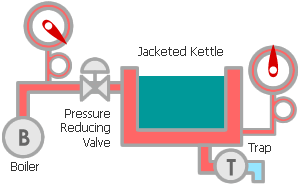
In a steam-using plant, steam is often generated at high pressures and reduced locally to provide heat for each steam user. This is usually done to minimize the diameter of steam distribution piping and enable more cost-efficient steam delivery.
Reducing Steam Pressure
A common way of lowering pressure is by throttling down the size of the steam passageway. For the most basic pressure reduction, it is possible to simply use a conventional globe valve in a fixed partly-open position, or by inserting an orifice plate into the flow of steam. However, any fluctuation in flow rate would be accompanied by a corresponding fluctuation in pressure. To avoid such circumstances, pressure reducing valves (PRVs) can be used to provide precise control of downstream pressure. They automatically adjust the amount of valve opening to allow the pressure to remain unchanged even when the flow rate fluctuates.
Advantages of Pressure Reducing Valves
While it is possible to maintain a constant pressure by using the combination of an actuated control valve, a pressure sensor, and a controller, a pressure reducing valve offers the advantage of being able to control pressure through fully-automatic self-contained operation, requiring no type of external power source. It can offer the further advantage of extremely rapid response action by immediately sensing and adjusting based on the downstream pressure.
|
|
| Fig. 1 Heating processes usually benefit from using steam at a lower pressure than that supplied by the boiler. Thus, pressure reducing valves are often used to reduce steam pressure to the set point value required by the process. |
Types of Pressure Reducing Valves for Steam
In pressure reducing valves, the mechanism that automatically adjusts the downstream pressure typically uses the balance of forces between the steam pressure and an adjustment spring. At present, this is a universal concept on almost all manufactured pressure reducing valves. However, there are two different ways in which this mechanism is implemented to control the amount of valve opening:
- Non-piloted, Direct Acting Valve: Adjustment spring places downward pressure setting force directly on the main valve.
- Pilot-Operated Valve: Adjustment spring places downward pressure setting force directly on a pilot valve, which is smaller and different from the main valve.
The following is an overview of the features of each type of PRV.
Direct Acting (Non-piloted)
Used for small loads where extremely close pressure control is not needed.
- Pros: Compact size, low price, easy to install.
- Cons: Higher droop (variation from set pressure) than Pilot-operated PRV.
| Direct Acting Pressure Reducing Valve |
|---|
|
|
|
Fig. 2 Delivered steam pressure is regulated by balancing forces acting directly on the valve itself: the downward force caused by compression of the adjustment spring against the upward force from the secondary pressure acting against the underside of a bellows or diaphragm. Note: The movements in the animation are slowed and exaggerated in order to show the opening and closing of the valve. |
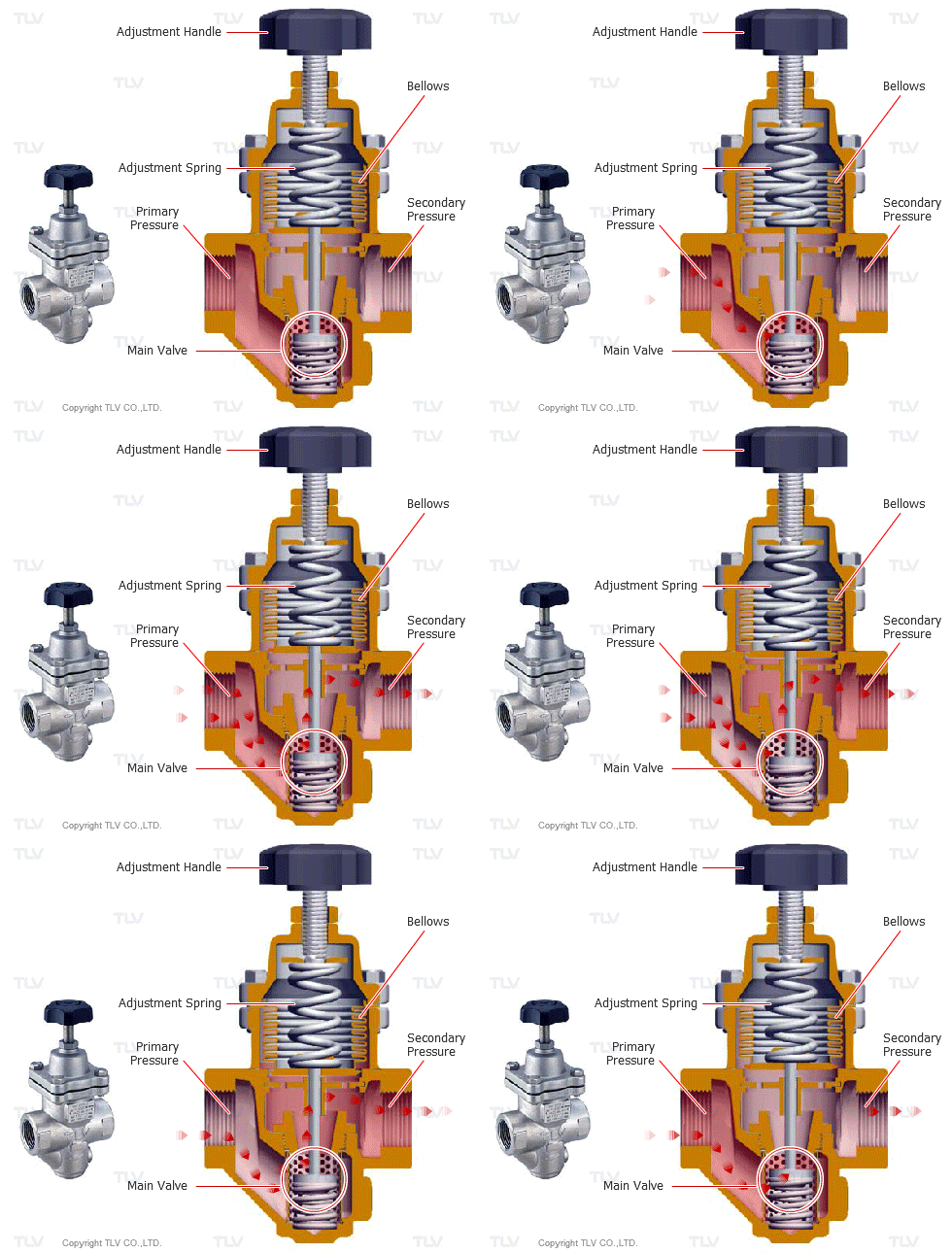
In direct acting pressure reducing valves, the amount of valve opening is determined directly by the movement of the adjustment spring. If the spring is compressed, it creates an opening force on the valve which increases flow. As pressure builds downstream, equalizing occurs by feeding the downstream pressure to the underside of the adjustment spring (usually against a bellows or diaphragm) where its upward force counter-balances against the spring compression. Spring compressive force which opens the valve is limited to allow sufficient spring sensitivity to equalize with downstream pressure changes. The net result is simple pressure control through a valve orifice where high flow rates can cause pressure droop.
Pilot-Operated
Used for larger loads where close pressure control is required
- Pros: Close pressure control, fast response to load variation, may be used across a broader range of flow rates than the direct acting types.
- Cons: Larger size, higher price.
| Pilot-Operated Pressure Reducing Valve |
|---|
|
|
|
Fig. 3 Delivered steam pressure is regulated in a similar manner as direct acting PRVs, however indirectly via a pilot valve. As the pilot valve is actuated, it provides the opening flow to the larger main valve which can supply significantly higher flow rates than the pilot itself. The pilot valve is then equalized by the secondary pressure, which correspondingly controls the opening flow to the main valve. Note: The movements in the animation are slowed and exaggerated in order to show the opening and closing of the valve. |
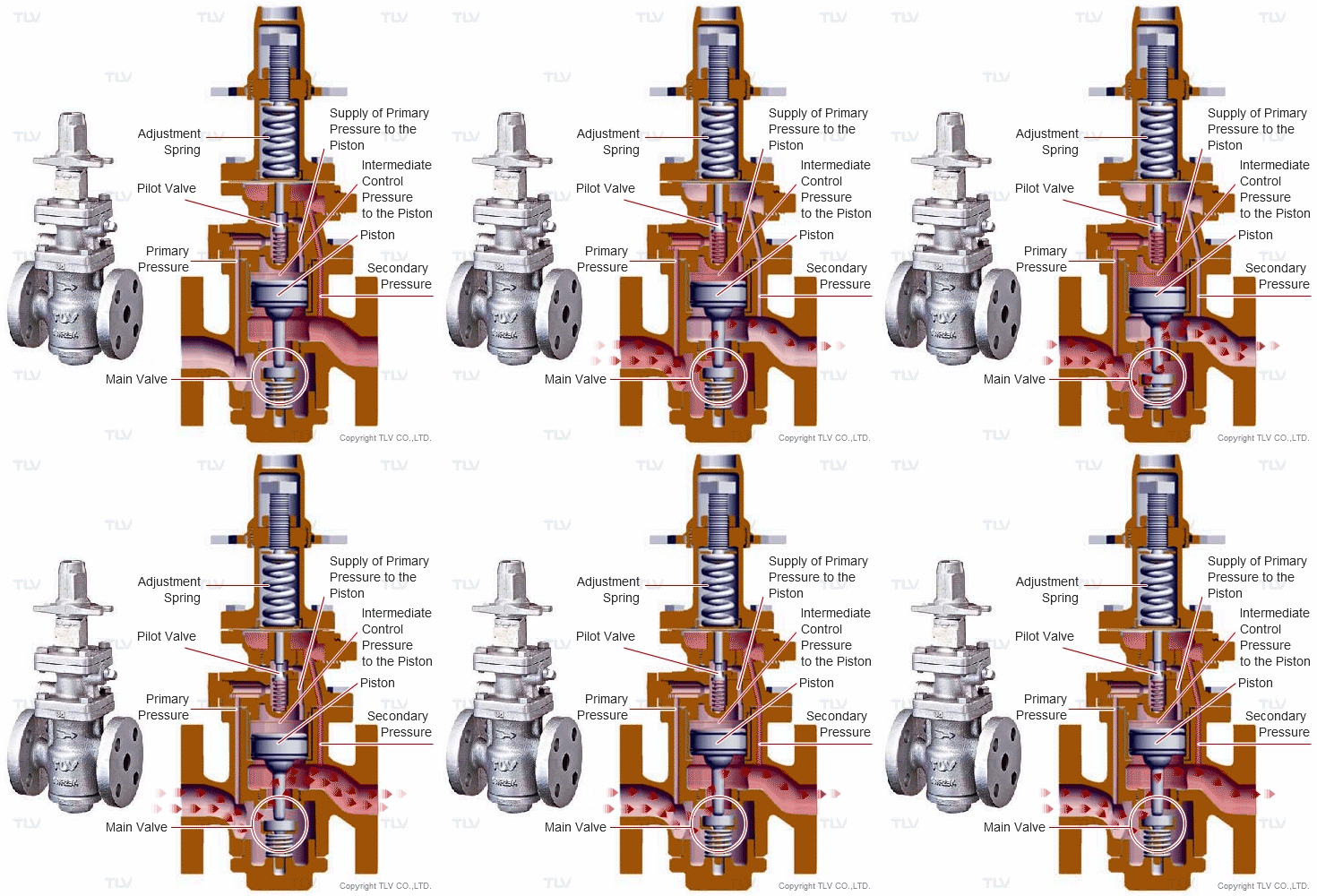
In pilot-operated pressure reducing valves, a pilot valve is used to load a piston or diaphragm that increases the downward force used to open a larger main valve. This enables larger flow capacity with a lower pressure offset (droop). The opening and closing of the pilot valve is controlled by the balance of force between the adjustment spring and the secondary pressure in the same manner that a direct-acting valve operates. However, in a pilot-operated PRV, this opening and closing of the pilot valve purposely delivers pressure to the main valve piston or diaphragm. This pilot flow pressure then causes a downward force that is amplified by the area of the piston or diaphragm to enable opening of a much larger main valve, which in turn provides the ability for very high flow rates.
Because the downward force is amplified through the use of a piston or diaphragm, a small change in the opening on the pilot valve can result in a large change in flow and downstream pressure through the main valve. As a result, there is little change needed in adjustment spring force on the pilot to accomplish quick response over a wide range of steam flow rates. Quick response and tight delivered pressure control represent the main advantages of this type of valve over the direct-acting type.
Summary
From the above characteristics, it can be seen that the function and applications of non-piloted direct acting PRVs differ substantially from those of pilot-operated PRVs.
In short:
- Direct-operated valves are used when loads are small and some downstream pressure droop may be accepted. They are generally used in light load services.
- Pilot-operated pressure reducing valves can respond quickly to varying load conditions while maintaining stable secondary pressure where precise pressure control is needed. They are generally intended for larger load applications.
Typical Applications in a Steam-Using Plant:
- Small load applications such as sterilizers, unit heaters, humidifiers, and small process equipment may typically use a simple Direct Acting PRV for pressure reduction.
- In case of larger flows, such as steam distribution piping, loads may fluctuate greatly depending on the operational status of the recipient equipment. Such load variations and large capacity would call for the use of a Pilot-operated PRV to reduce pressure.
- Furthermore, the amount of steam used by certain equipment at start-up may differ significantly from the amount required during normal operation. Such wide variations may also necessitate the use of a Pilot-operated PRV for pressure reduction.