- Home
- Steam Resources
- Steam Theory
- Methods of Mitigating Stall
Steam Trap Problems
Methods of Mitigating Stall
The following article will discuss Methods of Mitigating Stall in heat exchangers. For a detailed discussion on the causes of Stall and its consequences, please visit the article: What is Stall?
How to Mitigate Stall
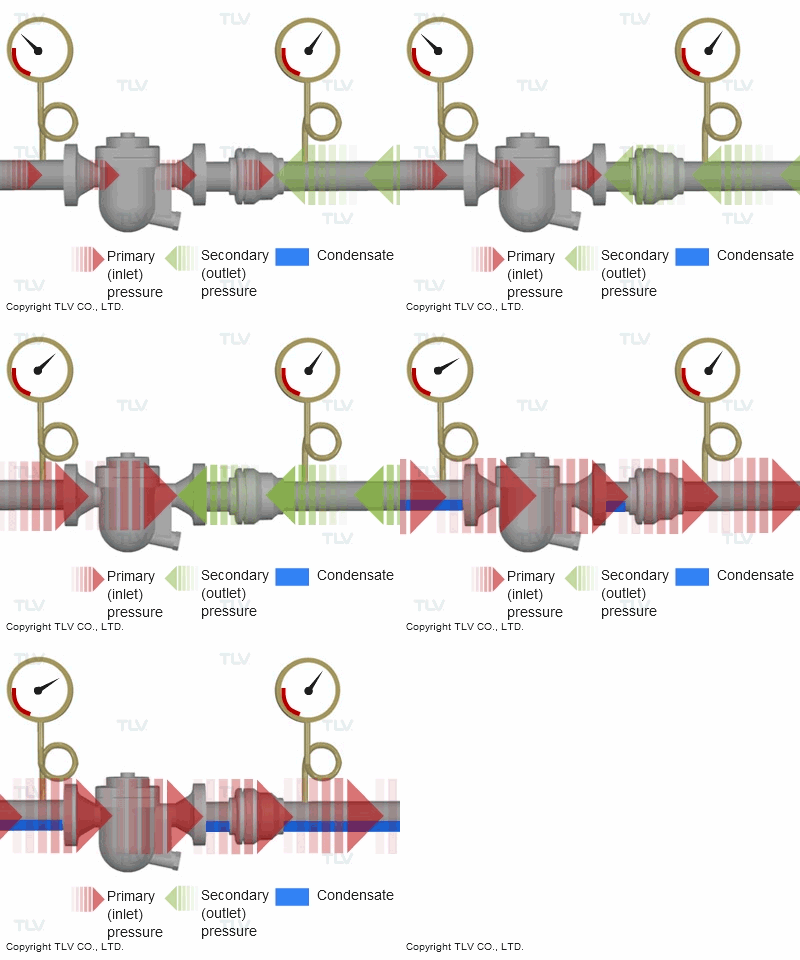
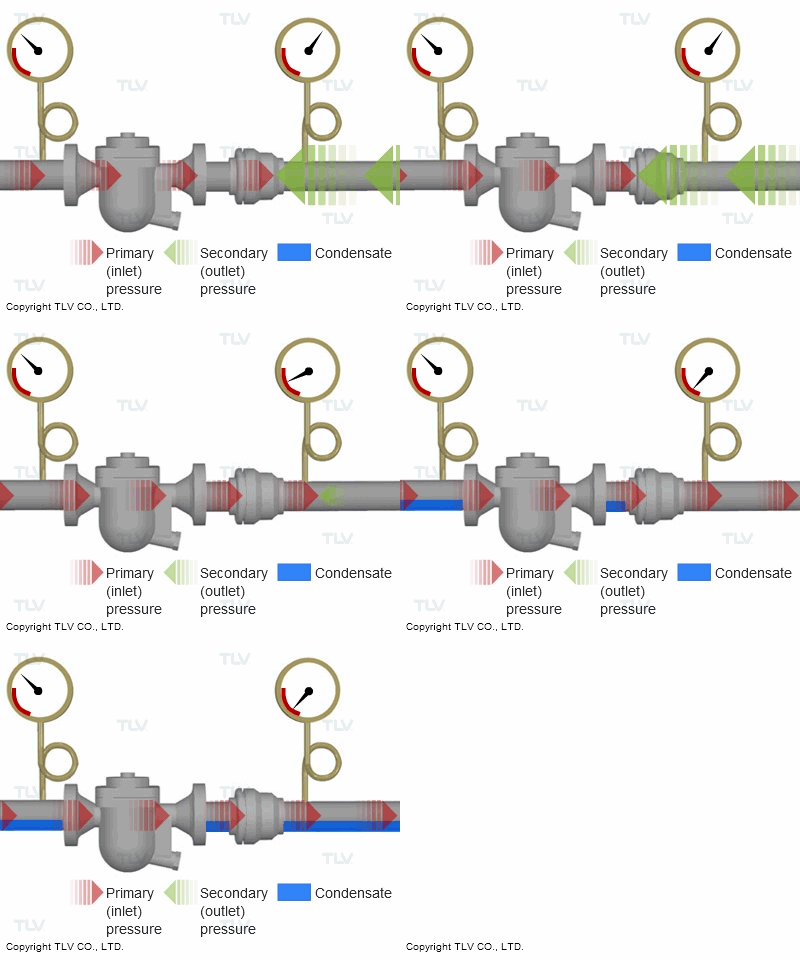
Stall occurs if the inlet (primary) pressure is smaller than the outlet (secondary) pressure across a drainage device such as a steam trap, which prevents condensate from being discharged and can cause condensate to pool inside the equipment. To mitigate this condition and allow condensate to discharge, the primary (inlet) pressure must be made larger than the secondary (outlet) pressure.
Theoretically, there are two ways to resolve Stall:
- Raising the primary (inlet) pressure, or
- Lowering the secondary (outlet) pressure
| Effect of Trap Operating Differential Pressure |
|---|
|
|
|
|
| Stall can be resolved by either raising the trap primary pressure or lowering the trap secondary pressure. |
Raising the Inlet Pressure
Raising the inlet pressure can be achieved by changing system configuration to include one of the following:
- Mechanical pump/trap (e.g., PowerTrap® GT)
- Trap discharging in flash receiver with mechanical pump (e.g., PowerTrap® GP)
- Trap discharging in flash receiver with motorized pump
When using a mechanical pump or combined mechanical pump/trap, steam or air pressure is applied to the pooled condensate to raise the trap primary (inlet) pressure so that it is higher than the trap secondary (outlet) pressure. This forces the discharge of condensate before it pools into the equipment.
Examples:
| Mechanical Pump/Trap |
|---|
|
|
| By installing a mechanical pump equipped with an internal steam trap (such as a PowerTrap® GT), and utilizing the steam pressure introduced from another pressure line, condensate can be discharged intermittently without accumulating inside the equipment (at the heat transfer surface). This type of pump/trap also eliminates any fear of cavitation. |

| Mechanical Pump |
|---|
|
|
| By installing a mechanical pump (such as a PowerTrap® GP), and utilizing a trap discharging into a flash receiver, condensate can be discharged from the trap because the trap secondary pressure (backpressure) is reduced. As shown in the animation, the pump is used when the condensate is returned to an elevated location. This type of pump also eliminates any fear of cavitation. |

| Motorized Pump |
|---|
|
|
| By installing a motorized pump, condensate is able to be discharged from the trap because the trap secondary pressure (backpressure) is reduced. As shown in the animation, a pump is used when the condensate is returned to an elevated location. When using a motorized centrifugal pump, a pump system for the mitigation of cavitation, such as the TLV CP-S or CP-N, is required. |

Lowering the Outlet Pressure
Lowering the outlet pressure requires the use of a vacuum pump. When using a vacuum pump, the pressure in the trap outlet piping (condensate return line) is reduced to below atmospheric pressure, thereby maintaining the differential pressure required for the trap to operate.
Example:
| Vacuum Pump |
|---|
|
|
| By using a vacuum pump, outlet pressure of the steam trap becomes less than the inlet pressure and condensate can be discharged through the trap. Depending on the capacity of the vacuum pump, one pump may be able to handle several pieces of equipment. |

Selecting the most appropriate solution for mitigating Stall requires careful investigation of various factors such as operating conditions, the configuration of the equipment, and the number of pieces of equipment installed. It is strongly recommended that a qualified technician evaluate the site before any decisions are made on which method to use.