- Home
- Steam Resources
- Steam Theory
- Returning Condensate and When to Use Condensate Pumps
Condensate Recovery
Returning Condensate and When to Use Condensate Pumps
The transport and recovery of condensate for reuse always requires a positive pressure differential from the source to the destination (typically a condensate collection area or return header). In some instances, a trap’s inlet steam pressure may be sufficient to overcome system backpressure, but in many installations the differential pressure is negative and requires a pump to transfer condensate to a recovery area.
Using Trap Inlet Pressure
When differential pressure is positive, transporting condensate to the collection tank can be done by simply using the inlet pressure to steam trap as the driving force. This recovery method is the lowest in cost and usually the most reliable. Since no special equipment is required, it is relatively easy to implement and should be the first choice option, whenever possible.
There are two different types of installations where recovery can be done by using trap inlet pressure:
- Gravity Returns
- Elevated Returns with Positive Pressure Differential
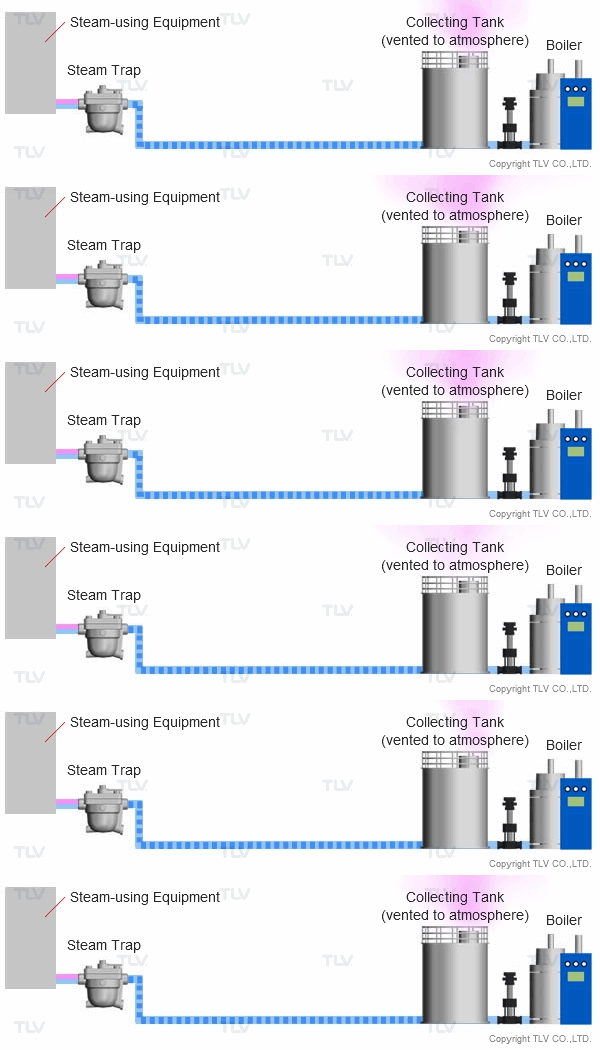
Gravity Return
The basic equipment needed is just a steam trap and transport piping because the differential pressure is always positive from downward drainage by gravity to an atmospheric system or vessel.
| Condensate Recovery Using Steam Trap Inlet Pressure |
|---|
|
|
| If the differential pressure across a steam trap is positive, then condensate can be transported and recovered with a very simple, reliable, and low cost installation. |
Elevated Return
It is possible for a steam trap to discharge overhead to an elevated return provided that the differential pressure remains positive and appropriate site safety standards are followed. A typical example is the draining of condensate from steam traps installed on main utility steam lines.
As vertical and horizontal distances increase, the system backpressure will also increase. Once the pressure differential becomes negative, the simple trap inlet pressure option will no longer work and then a pump or pump/trap option is required, as detailed below.
Tip
When using trap inlet pressure, the trap must be sized large enough for the condensate load, while making sure that the lowest inlet steam pressure is sufficient to overcome both the pressure drop through the trap and system backpressure
Using a Pump to Overcome (Return Line) Backpressure
A pumping system is required to transport and recover condensate once the system backpressure becomes higher than the lowest possible trap inlet pressure. System backpressure can be calculated by totaling the sum of 3 discharge side components:
- Lift after a steam trap, pump, or pump/trap
- Frictional loss of the transport piping
- Any static pressure associated with the destination recovery vessel
This sum of backpressure forces in a condensate system is typically referred to as Total Dynamic Head (TDH).
Here are some typical conditions that may require a pump’s use to overcome instances of negative differential due to higher TDH/backpressure:
- Backpressure from lift created by an elevated collection tank
- Piping friction caused by transporting condensate over distance
- Pressurized Collection Tank or Flash Vessel
- Condensate directly returned to the boiler
Electrically-powered Centrifugal or Turbine Condensate Pumps
When pressure differential from source to destination is negative, a common centrifugal or turbine condensate pump can be used to increase delivery pressure and obtain a positive pressure differential. Pumping can make the transport and recovery of condensate over much longer and higher distances possible. Condensate is first collected in a tank, and then electrically pumped to the location(s) where it is to be reused.
Two important elements to consider when using centrifugal or turbine condensate pumps are the Net Positive Suction Head Available (NPSHA) on the inlet side of the pump, and Total Dynamic Head (TDH) on the outlet side. In order to pump successfully, centrifugal or turbine selections must have a Net Positive Suction Head Required (NPSHR) that is less than or equal to the NPSHA, and a Total Discharge Pressure (TDP) that is suitable to flow against the TDH present. When these criteria are answered, electric pumps may allow for large amounts of condensate to be recovered and delivered at high pressures. In certain high pressure pumping instances, recovered condensate can even be fed directly into the boiler.
However, other than the potential problems related to design, such as lack of local electricity, expensive/stringent electrical ratings and over-amping/insufficient capacity, centrifugal or turbine condensate pumps can also face a serious problem known as cavitation.
Cavitation
Cavitation is caused by the formation of vapor cavities within the condensate from impeller rotation. It is more typical with high RPM motors and can occur when the liquid temperature being pumped rises above 80°C [176°F] and the NPSHA is lower than the NPSHR of the pump. Cavitation can lead to significant impeller damage and render a pump useless.
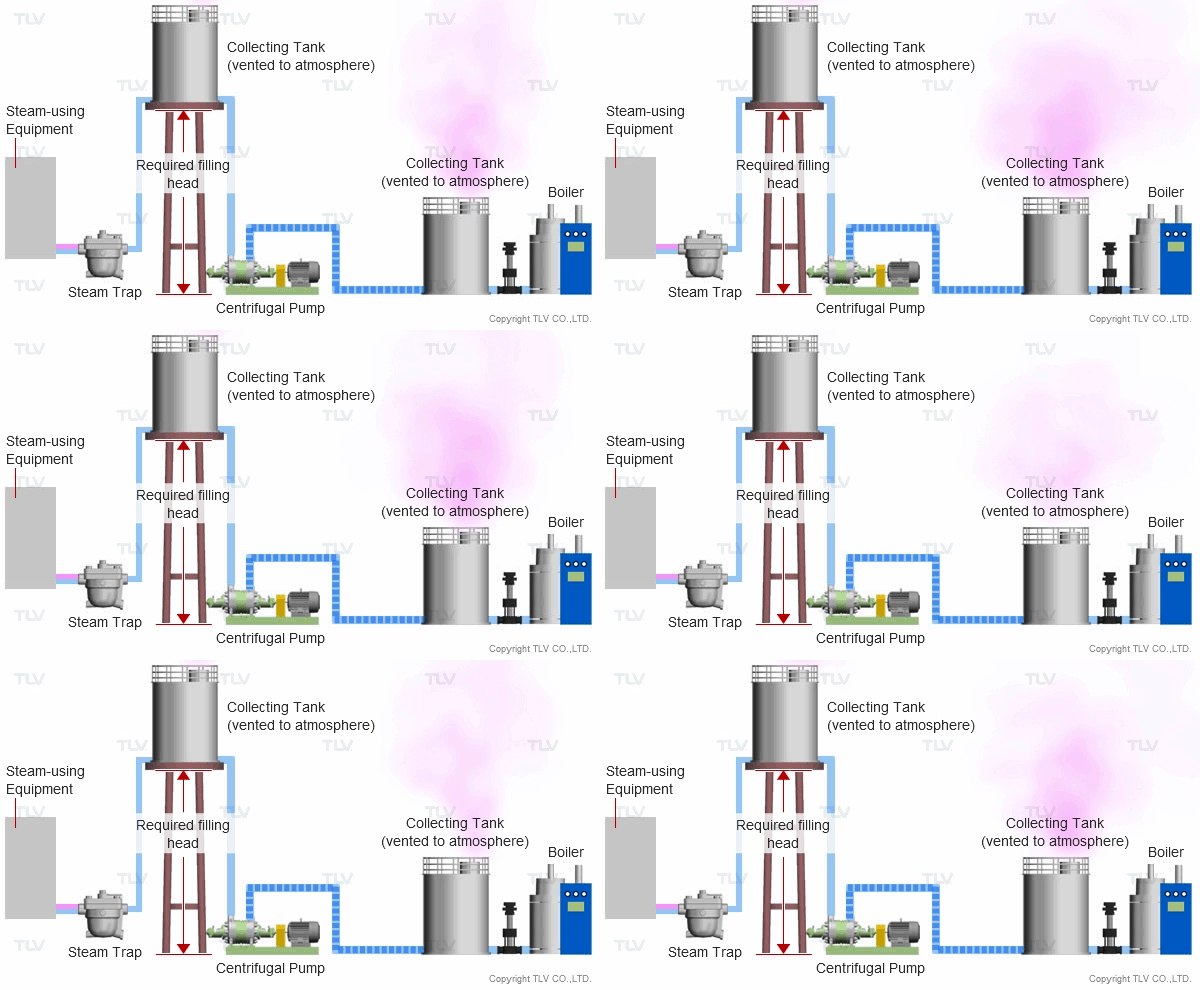
To pump hot condensate and limit cavitation, the NPSHA must be increased. One method to resolve this is to install an elevated collection tank (or collecting header) and increase the filling head by 3 to 5 meters [10-16 ft] above the pump’s NPSHR value for regular temperature water (as long as the additional equipment backpressure is acceptable). Another method is to use steam pressure to increase the pressure within the tank if components can handle the higher pressure/temperature. Specialized centrifugal pumps that do not experience cavitation are also available, as described later on.
| Condensate Recovery Using a Centrifugal Pump |
|---|
|
|
| A centrifugal pump can transport condensate to a distant collection tank. This method requires electricity and appropriate electrical equipment ratings, as well as a large enough NPSHA and TDP. |
Non-electric Steam or Air-Powered Mechanical Condensate Pumps
Mechanical condensate pumps, also known as Secondary Pressure Drainers (SPD) were invented to overcome the aforementioned issues that can occur with electric pumps. With mechanical pumps those prior referenced problems, such as cavitation, are removed or significantly reduced.
Mechanical condensate pumps rely on positive displacement for pumping and do not use impeller rotation, so there is no danger of cavitation. Furthermore, they are relatively unaffected by broad differences in back pressure, so TDH requirements are not as critical in their sizing. Additionally, they are well-suited for explosion proof areas and remote locations because they do not require any electricity. The types and capacities of mechanical pumps have increased in recent years, making them one of the most commonly preferred methods for recovering condensate.
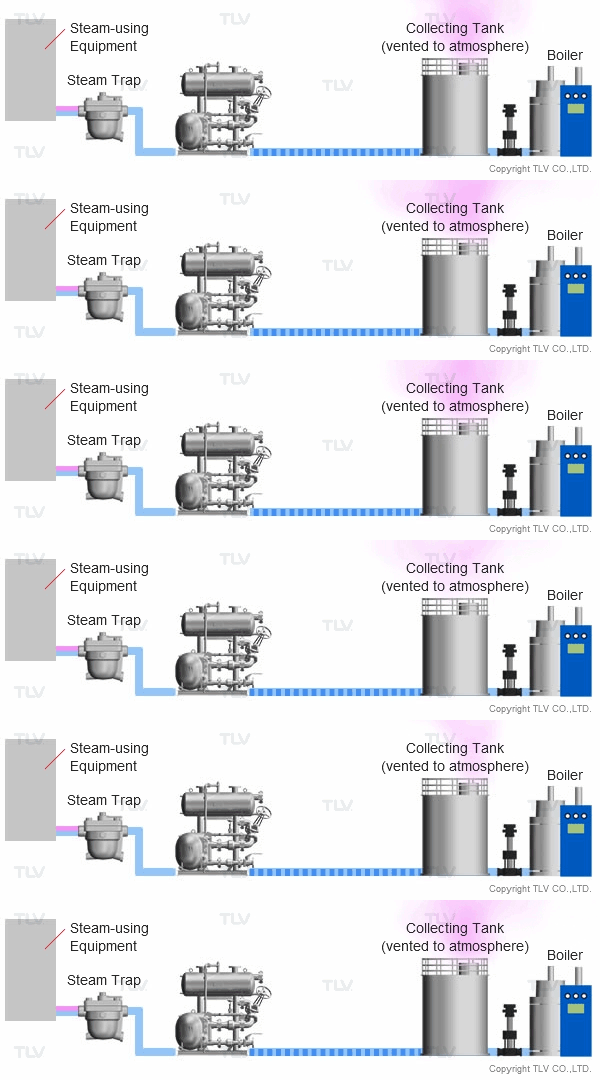
| Condensate Recovery Using a Mechanical Pump |
|---|
|
|
| A mechanical pump is used to transport condensate to a distant collection tank. This method doesn't require electricity, but requires a secondary pressure motive fluid such as steam. |
Using a Specialized Centrifugal Pump for Condensate Recovery Pumps
Specialized centrifugal pumps that do not experience cavitation have also been developed for condensate recovery. These use an ejector installed at the inlet side of the pump to resolve the problem associated with the drop in static pressure from a revolving impeller.
The ejector overcomes the pressure drop by feeding pressurized high temperature condensate into the centrifugal pump, making it possible to pump condensate without the fear of cavitation even with an NPSHA as low as 1 m [3 ft]. Because of the low filling head requirements, these condensate recovery pumps help reduce space requirements and installation costs, and remove the need to use an elevated collection tank or a pressurized vessel that would create backpressure on the equipment being drained. In essence, their use is similar to that of a conventional pump.
High-pressure centrifugal pumps with an ejector are also commonly used in pressurized systems to directly feed high temperature condensate back to the boiler.
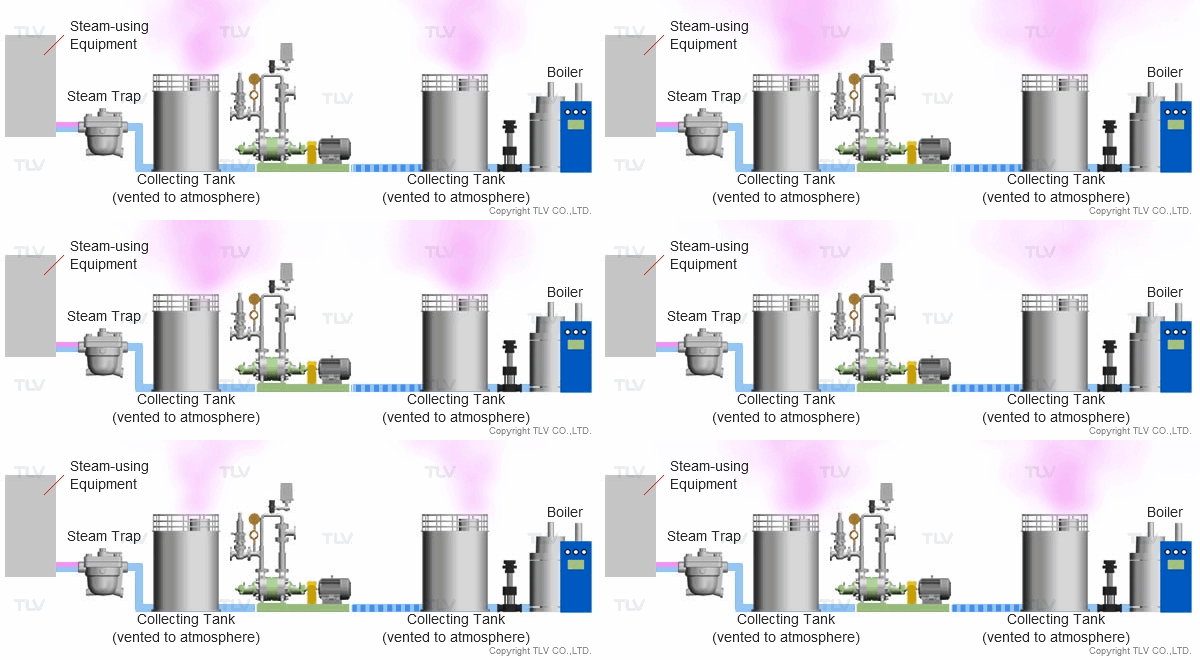
| Condensate Recovery Using a Specialized Condensate Recovery Pump |
|---|
|
|
| A specialized condensate recovery pump is used to transport condensate to a distantly located collection tank. This method requires electricity. |