- Home
- Steam Resources
- Steam Theory
- Types of Manual Valves
Other Equipment etc.
Types of Manual Valves
Many different types of manual valves are used in industrial applications worldwide. The following article will cover the general mechanism and function of the most typical of these valves used in steam systems, such as ball valves, butterfly valves, globe valves, gate valves, and diaphragm valves.
According to JIS, a valve is defined as:
A generic name for a device with a moveable feature* that opens and closes a passageway in order to allow, prevent or control the flow of fluids.
*The moveable feature referred to is the 'valving element'.
Manual Valves by Construction Type
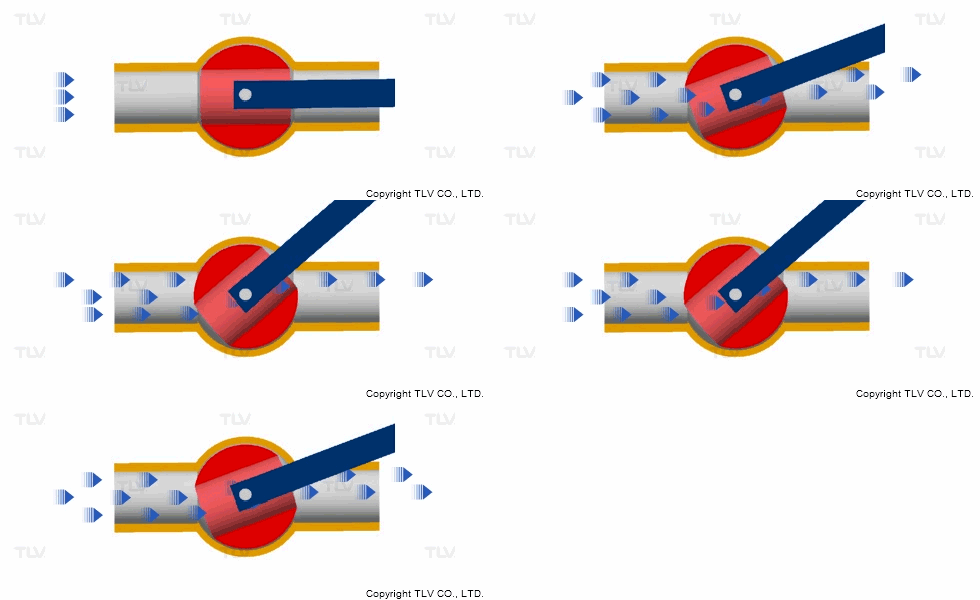
| The valving element rotates in the passageway to stop flow. |
|---|
|
|
| For further details jump down to: ball valve, butterfly valve |
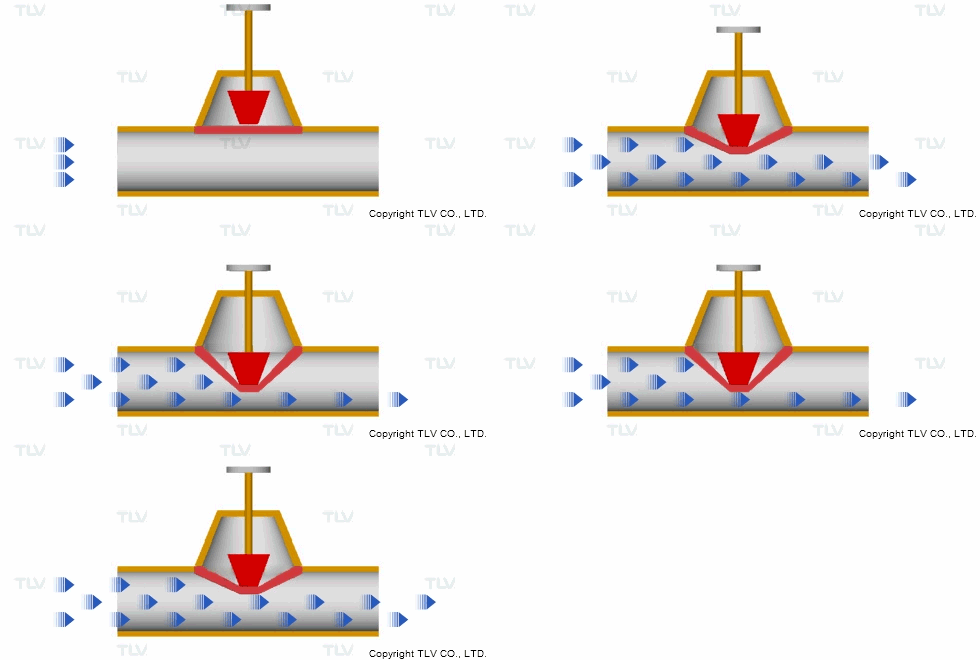
| The valving element acts as a 'seal' or 'plug' in the passageway to stop flow. |
|---|
|
|
| For further details jump down to: globe valve |

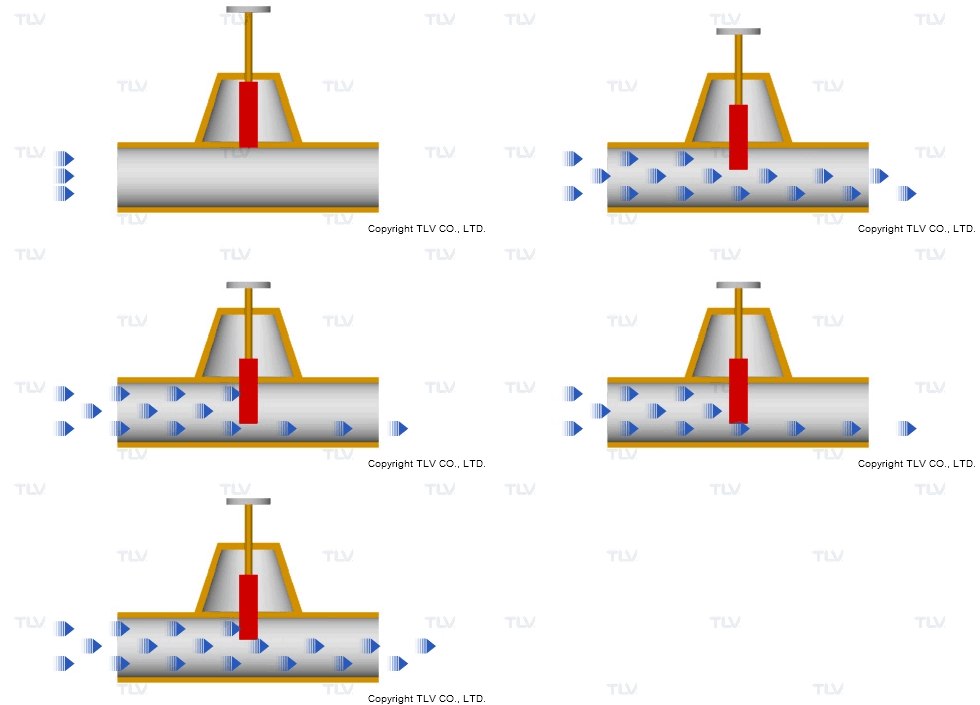
| The valving element is 'inserted' into the passageway to stop flow. |
|---|
|
|
| For further details jump down to: gate valve |
| The valving element is 'pinched' against the passageway from the outside to stop flow. |
|---|
|
|
| For further details jump down to: diaphragm valve |
Ball Valves
Ball valves offer very good shut-off capabilities. A simple quarter-turn (90°) completely opens or closes the valve. This characteristic minimizes valve operation time and decreases the likelihood of leakage due to wear from the gland seal.
Ball valves can be divided into two categories: reduced bore and full bore. In reduced bore valves, the valve opening is smaller than the diameter of the piping; in full bore valves, the valve opening is the same size as the diameter of the piping. Full bore ball valves are often valued because they minimize the pressure drop across the valve.
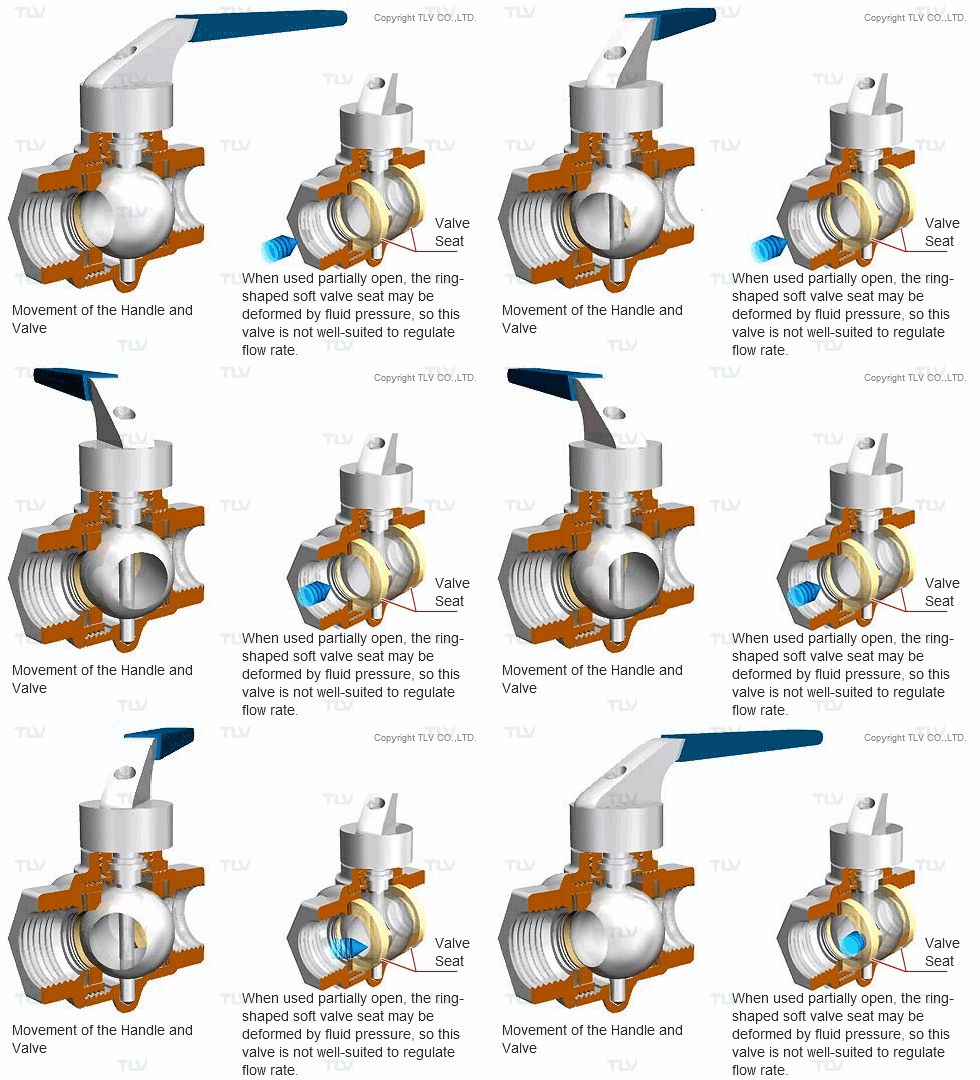
Balls valves are usually only recommended for use in the fully open or fully closed position. They are not suited to regulate flow by being kept partially open because ball valves make use of a ring-shaped soft valve seat.
When used in the partially open position, pressure is applied to only a portion of the valve seat, which can cause it to deform. If the valve seat deforms, its sealing properties are impaired and it will leak as a result.
Butterfly Valves
In butterfly valves, the flow is regulated through a disc-type element held in place in the center of the valve by a rod. Similar to ball valves, valve operation time is short because the valving element is simply rotated a quarter turn (90°) to open or close the passageway.
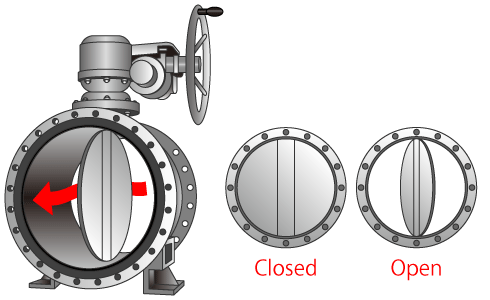
Butterfly valves are characterized by their simple construction, lightness in weight, and compact design. Their face-to-face dimension is often extremely small, making the pressure drop across a butterfly valve much smaller than globe valves (see below). Materials used for the valving element and sealing can limit their applications at higher temperatures or with certain types of fluids. Butterfly valves are often used on applications for water and air, and in applications with large pipe diameters.
Globe Valves
The globe valve is suitable for use on a wide variety of applications, from flow rate control to open/close operation.
In this type of valve, flow rate control is determined not by the size of the opening in the valve seat, but rather by the lift of the valve plug (the distance the valve plug is from the valve seat). One feature of globe valves is that even if used in the partially open position, there is less risk of damage to the valve seat or valve plug by the fluid than with other types of manual valves. Among the various configurations available, needle type globe valves are particularly well suited for flow rate control.
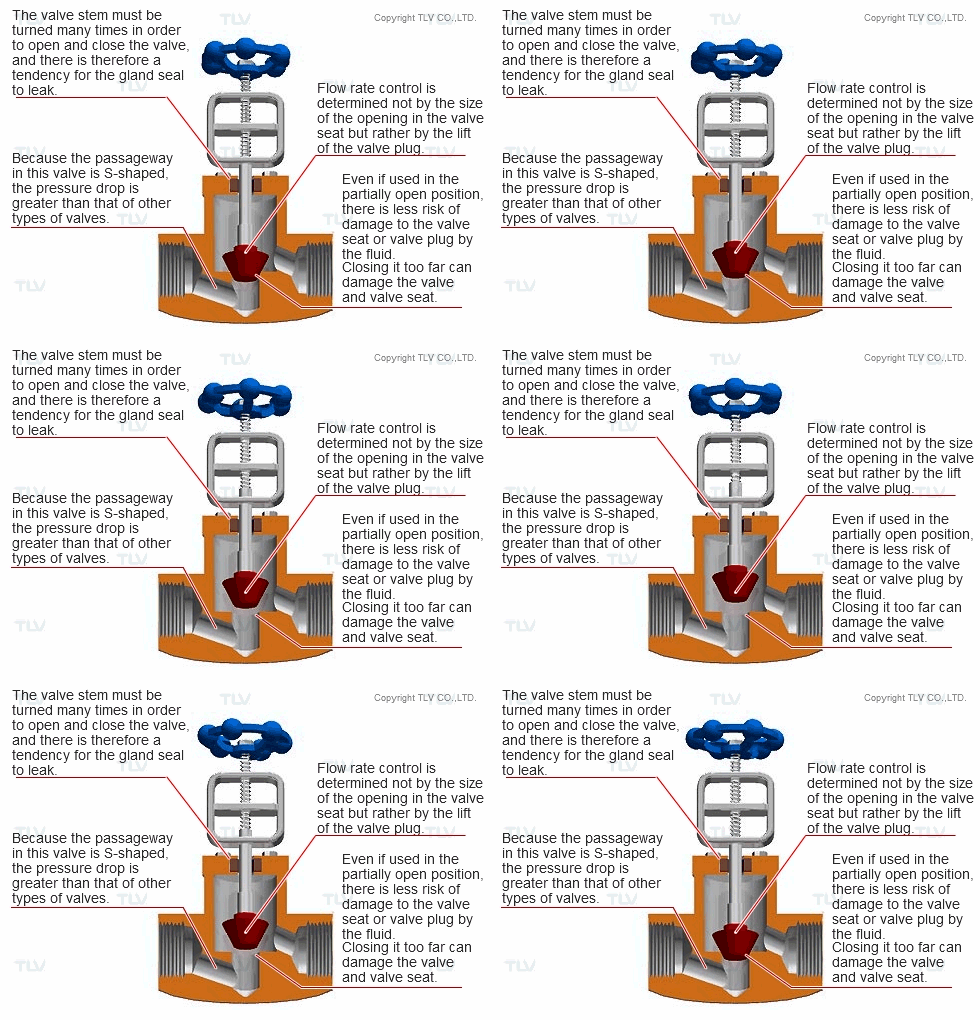
Another point to consider about globe valves is that the pressure drop across the valve is greater than that of many other types of valves because the passageway is S-shaped. Valve operation time is also longer because the valve stem must be turned several times in order to open and close the valve, and this may eventually cause leakage of the gland seal (packing). Furthermore, care must be taken not to turn the valve shaft too far because there is a possibility it could damage the seating surface.
Gate Valves
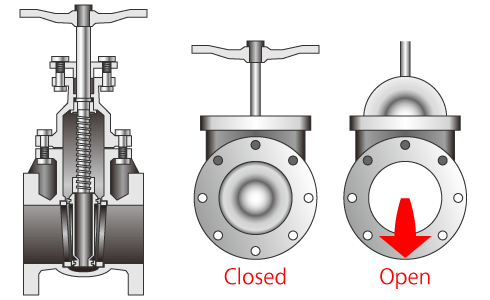
The construction of a gate valve is similar to that of a floodgate: flow is controlled by raising or lowering the valving element, which is generally available in three different types: solid (plain), flexible, and split. The latter two types help prevent the valving element and body from being deformed due to various operating conditions.
Like ball valves, gate valves are not usually used to regulate flow. One of the reasons for this is because the valving element can be damaged when in the partially open position. Similarly, they also limit the pressure drop across the valve when fully open. However, setting the valve to the fully open or closed position requires the handle to be turned many times, which generally makes these valves have the longest operating times among those valve types mentioned here.
Diaphragm Valves
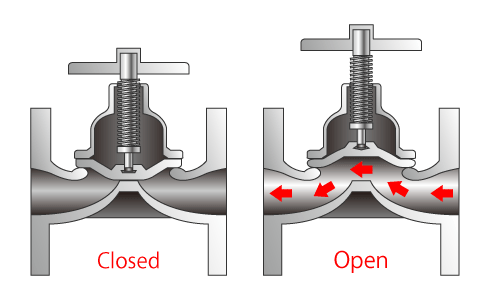
Diaphragm valves use a 'pinching' method to stop the valve flow using a flexible diaphragm. They are available in two types: weir and straight-way. The most commonly seen of the two is the weir-type. This is because the straight-way type requires additional stretching of the diaphragm, which can shorten the diaphragm's life-span.
One of the major advantages of using diaphragm valves is that the valve components can be isolated from the process fluid. Similarly, this construction helps prevent leakage of the fluid without the use of a gland seal (packing) as seen in other types of valves. One the other hand, the diaphragm becomes worn more easily and regular maintenance is necessary if the valve is used on a regular basis. These types of valves are generally not suited for very high temperature fluids and are mainly used on liquid systems.
Note: There exists a valve for steam systems that goes by a similar name. It is an automated valve with a diaphragm type actuator. This is often shortened to just 'diaphragm valve', so when a valve is referred to by this name, care must be taken to verify which type of valve it is.