- Home
- Steam Resources
- Steam Theory
- Water Hammer: The Mechanism
Steam Trap Problems
Water Hammer: The Mechanism
What is Water Hammer/Steam Hammer?
Have you ever heard a loud 'BANG' or hammer-like sound after quickly turning on or off a water faucet? This is the sound of water hammer in the water piping system. In a factory, a pump starting up operation or shutting down, or an air vent suddenly closing are examples of when this might occur.
In addition to water transport piping systems, water hammer also occurs in steam and condensate recovery (i.e. water circulation) systems. This series of articles will focus on water hammer in these latter two systems. Note that as steam is involved, this type of water hammer is also sometimes referred to as 'steam hammer'.
The Dangers of Water Hammer
When steam is first supplied to steam distribution piping or steam-using equipment, a metallic and repetitive 'bang, bang, bang', or even sometimes a violent 'boom' accompanied by vibration may be heard. Most steam users will probably have experienced one of these at some time.
 Do you know what water hammer sounds like? Listen here.
When water hammer occurs, a momentary abrupt pressure change of over 10 MPa may occur inside the piping.
This impact can severely jar piping, equipment or machinery housing, possibly resulting in damage not only to gaskets in junctions, but also to valve flanges or the valves themselves.
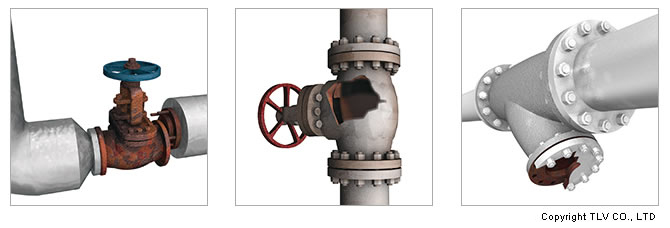 |
| Example of piping damaged by water hammer |
As soon as something like this, such as a valve, becomes damaged, large quantities of steam or hot condensate begin blowing out, which could lead to a serious accident. There have even been reports of deaths occurring as the result of water hammer. In spite of this, there is remarkably little research or literature devoted to its causes and prevention, and many steam users find themselves at a loss with how to cope with the issue.
Places Water Hammer (Steam Hammer) Occurs, by Type
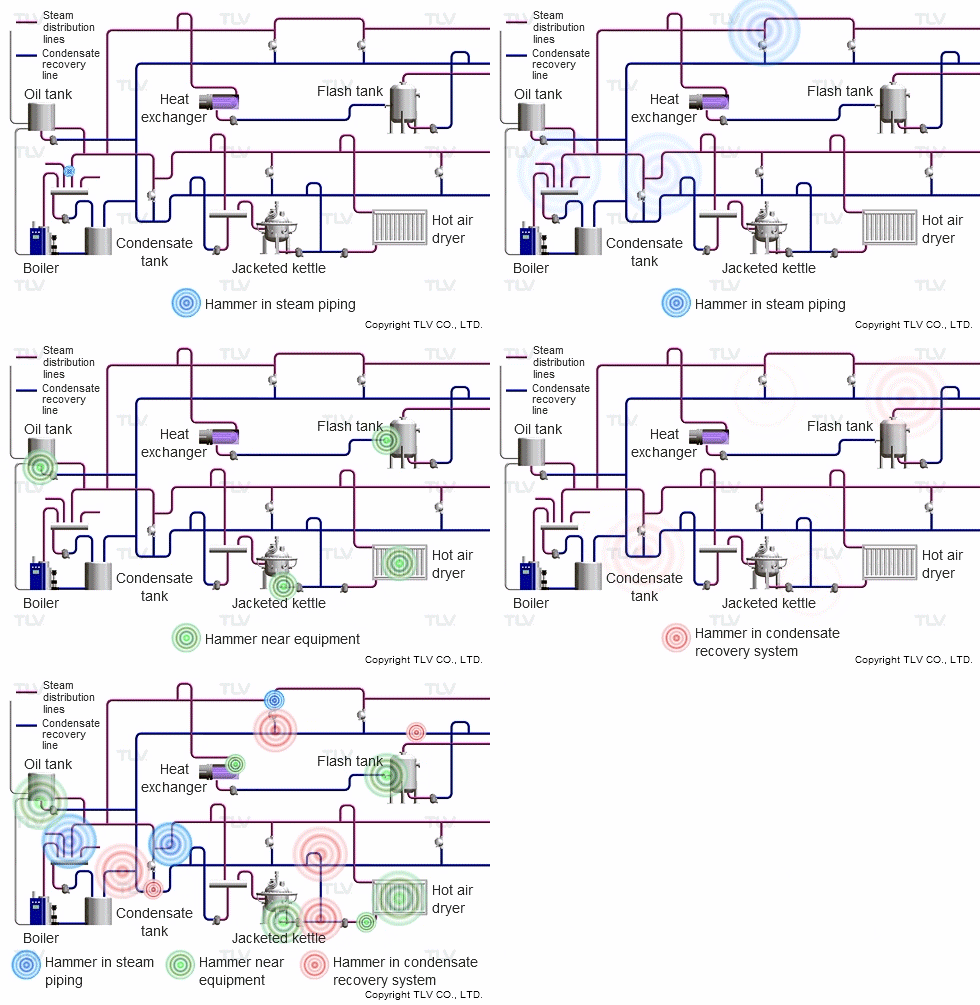
The Mechanism
Water hammer generated in steam and condensate recovery systems is usually classified into two main categories:
- caused by high-speed condensate slamming into piping, etc.
- caused by the sudden condensation of steam, which produces walls of condensate that crash into each other
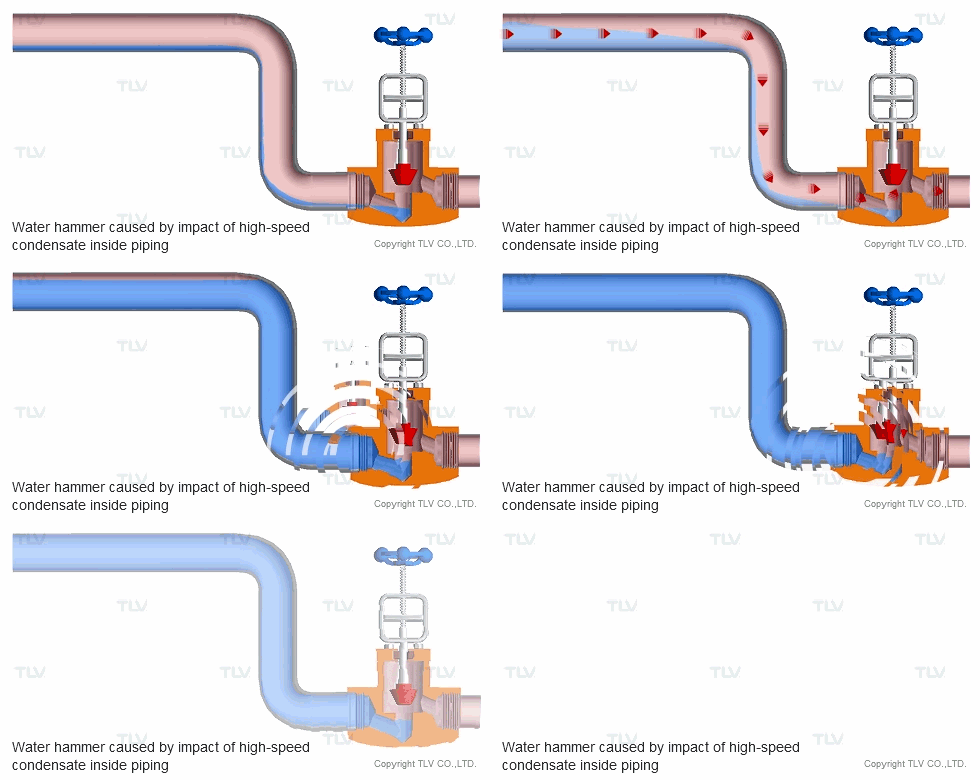
Water Hammer caused by high-speed condensate
Radiant heat loss causes condensate to form inside steam transport piping. Steam flowing at high speeds within this piping draws this condensate forward and causes ripples. From this turbulence, slugs of condensate gradually begin to form and are carried along with the steam. This is similar to the high waves formed by very strong wind.
In this case, water hammer occurs when these slugs of condensate strike a curve or valve as they travel through the piping.
Water Hammer caused by the sudden condensation of steam
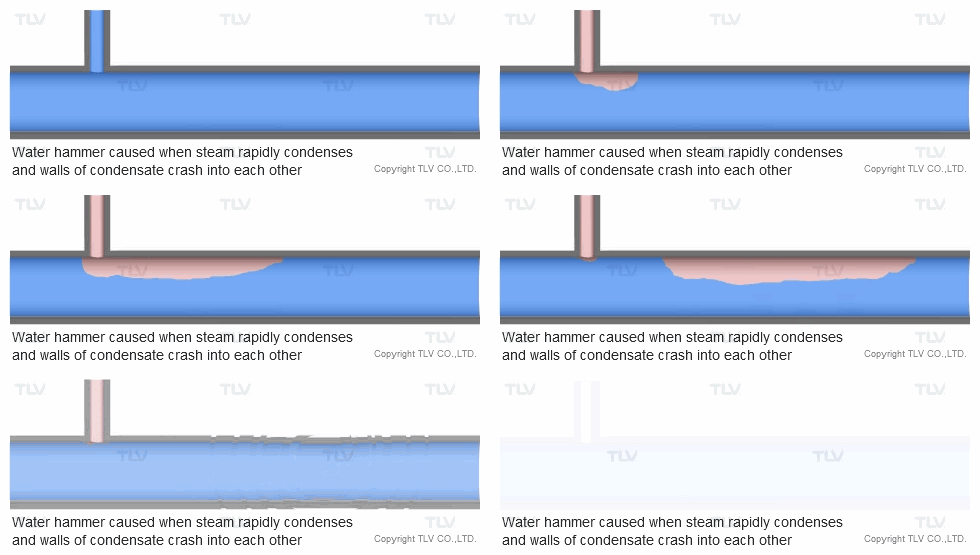
When steam loses its heat, it turns into condensate, whose specific volume is more than 1000 times smaller than that of steam. So when steam comes into contact with colder condensate and condenses, its volume is instantly reduced to next to nothing.
During the condensation process, the space occupied by the steam momentarily becomes a vacuum, and the condensate inside the piping surges toward this vacuum. This is the second type of water hammer, known as "steam-induced" water hammer, which occurs when these surging walls of condensate crash into each other.
As such, it is dangerous for piping to contain a mixture of cold condensate and steam. This is the norm, however, in condensate recovery piping and similar systems, which makes this type of water hammer difficult to prevent.
Although this type of water hammer created from steam pockets is limited to condensate recovery systems, water hammer also occurs in steam distribution lines and steam-using equipment when condensate is not drained quickly ("condensate-induced" water hammer).
Powerful impacts can occur in both of the above-mentioned types of water hammer; however, these impacts occur with greater frequency in the case of steam-induced hammering.
| The video above is actual footage captured by TLV of steam-induced water hammer occurring in clear condensate return piping. This type of water hammer can happen when steam pockets collapse in condensate recovery lines. |
How does condensate temperature affect water hammer?
Previously, it was believed that the lower the temperature of the condensate, the greater the resulting water hammer. However, experiments carried out at TLV revealed a surprising fact. It was discovered that the most severe impacts from water hammer occur when the condensate is at a temperature only slightly lower than that of the steam.
More specifically, at a steam temperature of 100 °C, it was found that condensate between 70 °C and 80 °C caused water hammer on a larger scale than condensate between 50 °C and 60 °C.
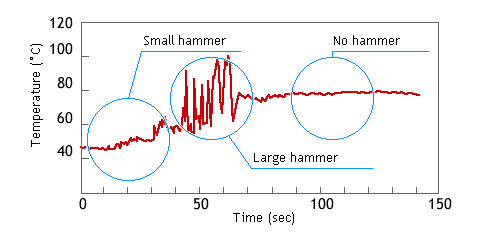
In fact, the impact caused by water hammer can be mathematically calculated, and the results of such calculations show a strong relationship between the intensity of the water hammer and the volume of the condensing steam (= called ‘pockets of steam’).
Taking a closer look at the graph, three zones of condensate temperatures can be identified:
- On the left side of the graph, steam comes into contact with cold condensate and immediately condenses. In this case, condensation happens on the scale of tiny steam bubbles and large 'pockets of steam' cannot form, hence only small water hammer occurs.
- The middle section is of greater concern. Due to the relatively small temperature difference of 20-30°C between the condensate and steam, the steam does not condense all at once, but gradually. As the condensation process slowly occurs, it will reach a point where suddenly all the steam condenses. The delay created between the time the steam comes into contact with condensate and the time it suddenly condenses is what allows the formation of bigger pockets of steam, and hence bigger water hammer.
- On the right side of the graph, steam comes into contact with condensate of the same temperature. In this case, it does not instantly condense and water hammer does not occur. This can be confirmed from the fact that water hammer does not appear right at the outlet of a steam trap where saturated condensate coexists with flash steam of the same temperature.
We know that condensate between 70°C and 80 °C causes an increase in size of the 'pockets of steam' and with this the most severe water hammer. So what triggers the process? Find out in Water Hammer: Cause and Location.
Having problems with water hammer? Our steam specialist engineers can help.