- Home
- Steam Resources
- Steam Theory
- Identifying Water Hammer Using a Thermal Camera
Steam Trap Problems
Identifying Water Hammer Using a Thermal Camera
Using a Thermal Camera to Help Identify Water Hammer Risk Areas
One method of identifying water hammer areas is to take thermal images of your plant’s piping and equipment. This method provides a visualization of temperature distribution and is an effective way of identifying locations where water hammer is more likely to occur.
The main reason for using a thermal camera in your system is to locate sections of pipework that are both hot and cold. As explained in previous articles, there is a chance of condensate induced water hammer occurring in any location where steam and condensate mix. In a condensate return line, for example, steam and condensate inevitably mix, meaning that if the pipework is not designed carefully, condensate-induced water hammer is possible.
If water hammer is already occurring, one way of determining its location and cause is to use thermal imaging to locate pipe sections with a large temperature difference. Such areas would be considered to be at a high risk of water hammer. The surveyor must take steps to determine the cause of large temperature drops, and design methods of rectifying these problem areas.
Example Thermal Images of Water Hammer Location
The sample thermal images below demonstrate the variation in the temperature of a condensate pipe where water hammer occurs at certain times during the day. The pipe contains a mixture of steam and condensate in all images, but the images on the right show a time during the day when the temperature is greatly reduced. This reduction in temperature suggests that the condensate is not draining properly and is pooling in the condensate return pipework.
This impact can severely jar piping, equipment or machinery housing, possibly resulting in damage not only to gaskets in junctions, but also to valve flanges or the valves themselves.
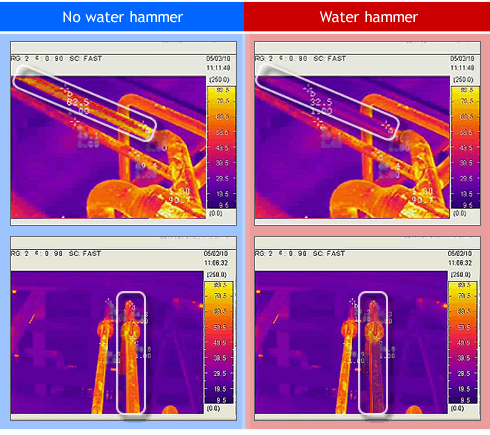
Condensate pooling can be easily identified in the thermal images as large quantities of condensate will sub cool over time and become visually distinguishable compared to the rest of the pipework. From this, the surveyor must determine why condensate removal has slowed or stopped, for example as a result of a blockage or even an increase in condensate load, and take steps to rectify the problem before an accident occurs.
Cold spots on steam mains also suggest condensate pooling. Like with condensate piping, the surveyor must identify why condensate is pooling at such points and take steps to rectify these problem areas.
Points to Consider When Using Thermal Imaging
While thermal imaging is an effective way of determining areas where water hammer is likely to occur, some care must be taken when judging at-risk areas to prevent misdiagnosis.
As mentioned before, there is commonly a temperature difference in condensate return pipework and steam main dirt pockets, but this does not necessarily mean that water hammer will occur, as water hammer should not occur if piping has been correctly sized and designed.
Furthermore, while the temperature of condensate is normally close to that of steam, there are operational conditions which can cause the condensate to sub cool significantly when returned to condensate return piping. In a thermal image, such piping may appear to have a large temperature gradient suggesting water pooling and therefore a water hammer risk, but the risk of water hammer in such a system is in fact low.
Finally, as the surface of piping must be exposed in order to effectively measure temperature, images should be taken during a trial operation before any insulation is applied. If insulation is already in place, it can be temporarily removed for the purposes of taking the images.
Conclusion
Water hammer has been long considered an unavoidable and harmless phenomena seen on almost every steam site. However, this is not the case. Water hammer poses a serious risk for both site personnel and site equipment, with potential consequences including damaged equipment, serious injury, and in a worst case scenario, death. Wherever water hammer is identified or suspected it must be investigated, its risk determined, and preventive action taken.
TLV’s steam specialist engineers can help to identify the cause of water hammer and devise effective countermeasures. Contact us today to request a plant survey:
- 9.Water Hammer in Condensate Transport Piping
- Return to index
- 11.Erosion in Steam and Condensate Piping