- Home
- Steam Resources
- Steam Theory
- What is a Steam Trap?
Basics of Steam Traps
What is a Steam Trap?
Steam traps are a type of automatic valve that filters out condensate (i.e. condensed steam) and non-condensable gases such as air without letting steam escape. In industry, steam is used regularly for heating or as a driving force for mechanical power. Steam traps are used in such applications to ensure that steam is not wasted.
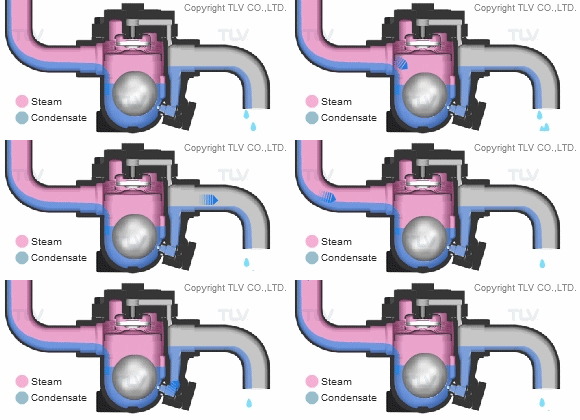
ANSI defines steam traps the following way:
Steam trap - Self contained valve which automatically drains the condensate from a steam containing enclosure while remaining tight to live steam, or if necessary, allowing steam to flow at a controlled or adjusted rate. Most steam traps will also pass non-condensable gases while remaining tight to live steam.
ANSI/FCI 69-1-1989
Why are Steam Traps Installed?
Steam is formed when water vaporizes to form a gas. In order for the vaporization process to occur, the water molecules must be given enough energy that the bonds between the molecules (hydrogen bonds, etc.) break. This energy given to convert a liquid into a gas is called 'latent heat'.
Steam-based heating processes use latent heat and transfer it to a given product. When the work is done (i.e. steam has given up its latent heat), steam condenses and becomes condensate. In other words, condensate does not have the ability to do the work that steam does. Heating efficiency will therefore suffer if condensate is not removed as rapidly as possible, whether in steam transport piping or in a heat exchanger.
For further details on the steam heating mechanism, read the following article on Steam Heat Transfer.
Reason Steam Traps are Necessary (e.g. Jacketed Kettle)
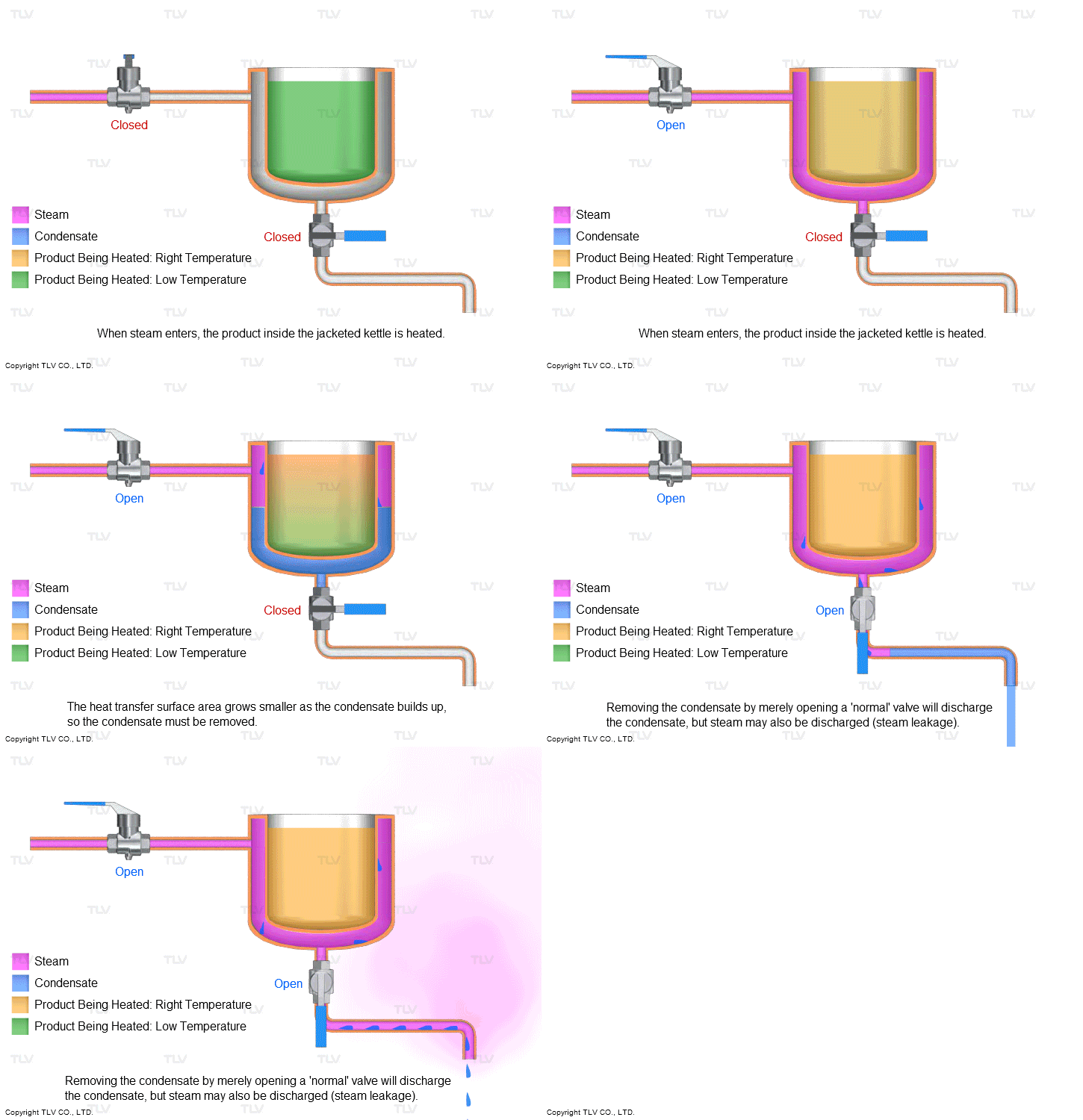
What's Wrong with Using a Manual Valve?
It is sometimes believed that the load of condensate can be regulated with a regular valve instead of a steam trap by simply adjusting the valve opening manually to match the amount of condensate generated.
Theoretically, this is possible. However, the range of conditions necessary to achieve this are so limited that in practice it is not a realistic solution.
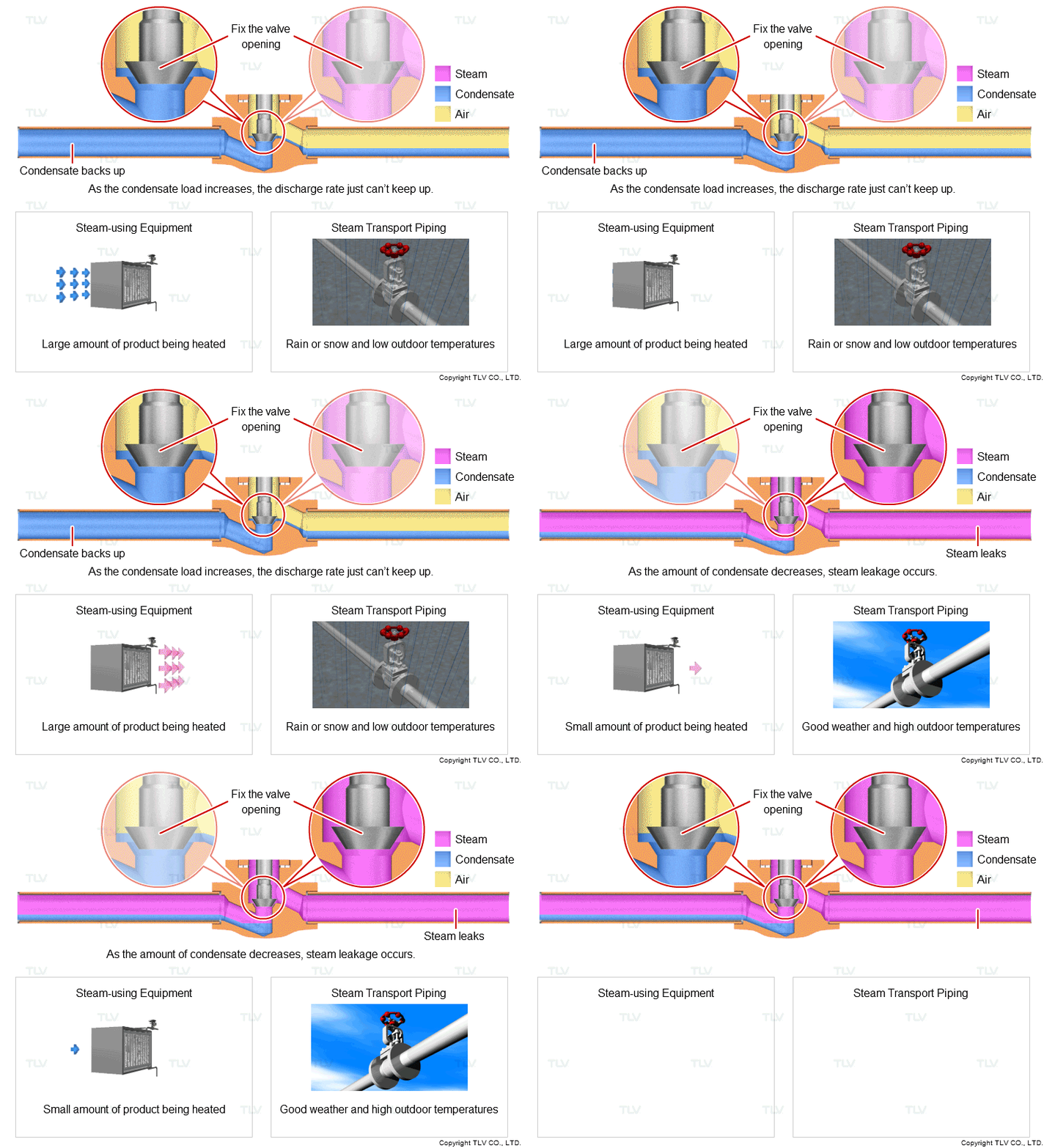
The largest problem with this method is that having the valve opening set to discharge a fixed amount of fluid means that fluctuations in the load of condensate cannot be compensated for. Indeed, the amount of condensate generated in a given system is not fixed. In the case of equipment, the load of condensate at start-up differs from that during normal operation. Fluctuations in the product load also result in differences in the amount of condensate generated. Similarly, in the case of steam transport piping, the load of condensate may differ depending on outdoor air temperature or as a result of heavy rain or snow.
If the device can't respond to fluctuations in condensate load, condensate that should be discharged will instead pool inside the equipment/pipe and heating efficiency will suffer. On the other hand, when the condensate load lessens, steam leakage will occur and steam will be wasted.
Reduction in Heating Efficiency and Wasted Steam
Steam Traps Come in Various Different Mechanisms
Various types of steam trap mechanisms (operation principles) have been developed to automatically discharge condensate and non-condensable gases. The most widely used mechanisms are those that rely on differences in temperature, specific gravities, and pressure. Each of these types of steam traps has its own advantages and applications.
Visit the article The History of Steam Traps for further information on the specific types of steam traps.